You'd be Furious: A Symbolic Story About ABA

Imagine for a moment that you have a seven-year-old son who broke his leg falling off a trampoline a little while ago.

As far as your doctor can tell, the fracture healed just fine, but your son is continuing to limp. Reasonably, the doctor thinks that physical therapy would be good for your son.

You sign your son up for therapy. It's done when you're not in the room on the therapist's request. The therapist says that having you in the room would be too distracting for your son. 

After a couple of months of this therapy, you notice something odd. Your son's limp is gone in public, but gets worse at home. Not only that, but he will outright lie if anyone asks him about his previous injury. "It was only a pulled muscle," he says. "It didn't hurt that much." "It's completely better now." "I was never on a trampoline." You also notice that when he's in public, he never seems physically uncomfortable, but at home he frequently needs to ice his injury.

After asking your son some very pointed questions, you learn that his "physical therapy" hasn't been working on making his leg stronger at all. The therapist had been teaching your son how to hide the limp, and rewarding him with candy for hiding the limp well. They were also coaching him on how to lie about the injury, because they had realized that you felt embarrassed and guilty that the injury had happened in the first place. 

Your son hadn't wanted to lie, but he was denied snacks, bathroom breaks, and water in those long therapy sessions until he promised he would lie on the therapist's command.

The reason why your son was hiding his limp in public but not at home was he feared that other adults would scold him for limping, because the therapist had told him that people don't like children who limp. Home felt safer, so it became the only place your son allowed himself to behave as if he was in pain.

If all this happened, you'd be furious. This entire situation was incredibly abusive! Your son was taught to hide his pain - at his own expense - just to make the adults more comfortable. And to what end? Some other people around him got to swallow a comforting lie that he was doing okay. According to the therapist, that made everything they put your son through worth it.

This is exactly what ABA does. It trains children to hide their own discomfort - and whatever they're doing to manage that discomfort - from other people. For no better reason than to make those people somewhat more comfortable. It's not a child's fault if his autistic traits annoy other people any more than it would be his fault if someone became irritated by seeing him limp.

It amazes me that even though most people wouldn't be okay with a "typical" kid being trained like a dog to hide his discomfort, they continue to subject autistic children to ABA and similar practices. If something's abusive to do to a "typical" child, it's abusive to do to a disabled one. If anything, behaving that way to a disabled child is even crueler.


Where Does "Christmas Magic" Come From?

When most of us think of Christmas, the image of Santa Claus immediately comes to mind. While he's a fun sort of character to have in our movies and on our Christmas cards, I think that a lot of people mistakenly think that this mascot is where feelings of "Christmas magic" or "Christmas spirit" originates. 


Sometimes, Santa becomes so dominant that we forget that there's more to Christmas than a man in a red coat. Not to mention, there's the bizarre cultural pressure parents are under to present Santa as a real person, lest they ruin the "Christmas magic" for their children.


This in mind, here is my list of the reasons why we feel "Christmas magic" - an exploration of where it really comes from, and why we feel it the way we do.


1) The light of Christ


That love that inspired our Savior to be born to this world and ultimately die for us can be felt very strongly at the time of year we celebrate His birth. That "magic" that we're feeling is really love and hope.


2) Feeling loved


Similarly, feelings of unconditional love from our families and other people who care about us can often be felt more clearly around Christmastime. 


3) Beauty


When we take in something beautiful, it may make our hearts feel lighter - which can feel like "magic." There are so many beautiful things to see at this time of year that it's no wonder that we feel this uplift often.


4) Novelty

Sometimes we get so used to our everyday lives that a change in routine can feel just slightly surreal - "magic."


Cartoon#5

 (Recap: During the last two cartoons, my brain went into hysterics with when I tried to eat a food it doesn't like, then yelled at me for eating something "too boring.")


This is Fine

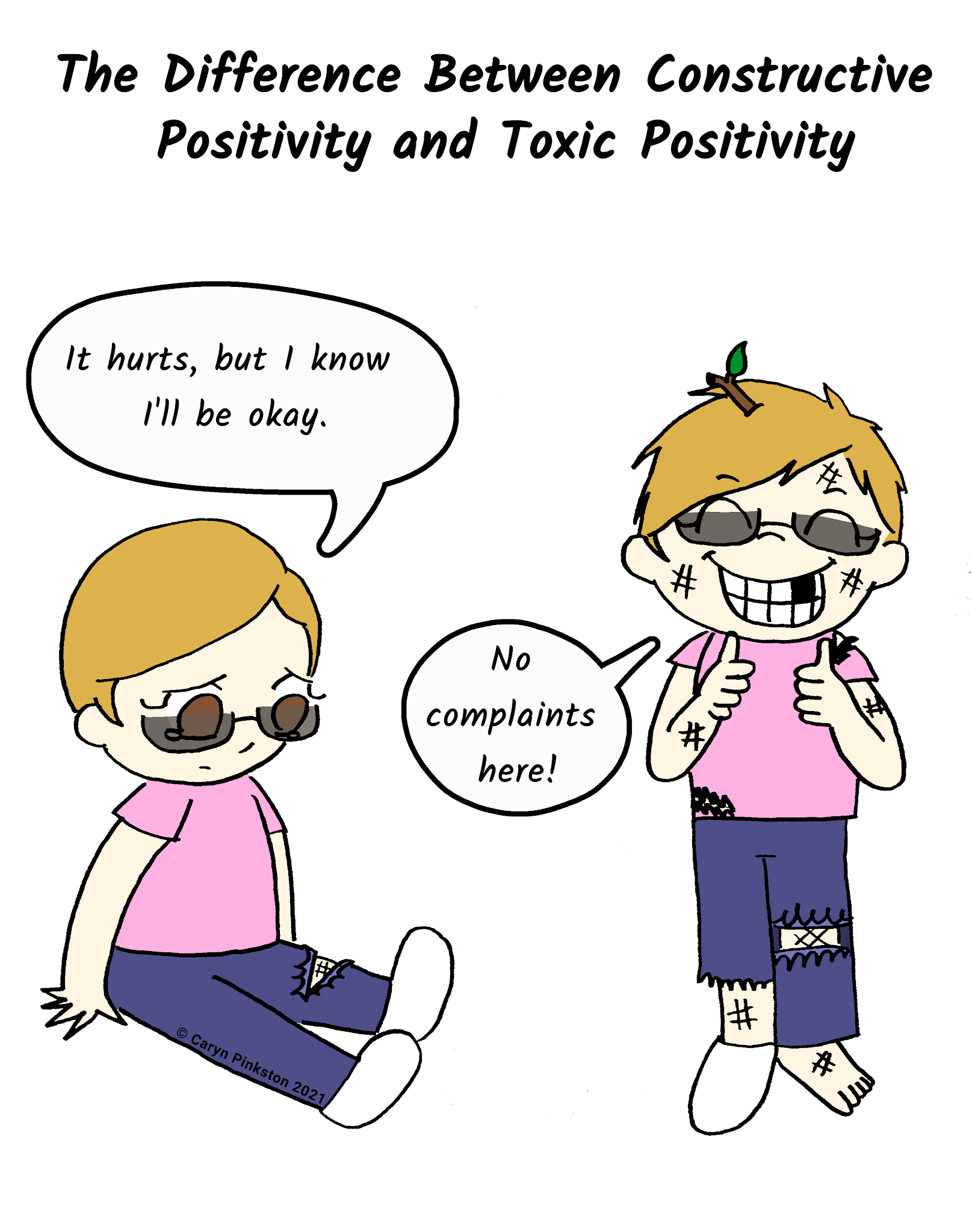
So, I there's something I've been realizing, and I'm feeling very sobered. I keep on saying things like, "I don't know why I feel this way, because nothing seems that wrong." I've been kidding myself, and lying to other people into the bargain. My "normal" includes chronic pain, high levels of anxiety, a baseline level of depression, and chronic fatigue, just to name a few of my many struggles. My life has been this way since before the migraines, and will probably remain in a similar state, even if the migraines eventually stop.

The truth of the matter is that I'm so used to feeling like crap that if what I'm feeling isn't that much worse than my usual level of crap, I try to dismiss my struggles. "Oh, why isn't my room clean, why don't I exercise, and why am I not socializing?" I think to myself. "I feel only slightly worse than usual. I should be able to take this." I seem to just sort of forget that I have actual reasons to be struggling. And yet, I'm constantly criticizing myself for my weaknesses, and trying to hide those weaknesses from other people too. "Sorry, I don't know why I'm becoming emotional right now," I say to others, while mentally berating myself for letting my emotions show. "I'll be okay in a minute," I lie. I lie as I'm breaking down on the inside from pressures that I'm too afraid to talk about. Pressures that I don't always have words to describe.

When you come right down to it, I'm a mess, and it's probably my denial of my own problems that caused me to get this sick. There are health issues I was born with, but if I had always been open with my family and with myself about how I was feeling, those issues would never have become as bad as they did. Refusing yourself things you need is downright dangerous, and I'm only barely starting to unravel the reasons why I do this to myself. Somehow, I've had an idea in my head that "good" people don't ask for anything for themselves. 

I don't know how I'm going to fix this habit of lying about how I'm feeling. I just know that I have to overcome it somehow. 


The Most Common Scripting Mistakes I See in Childrens' Movies

The conflict isn't age appropriate. Seriously, why are so many princess movies where the princess is trying to avoid an unwanted marriage? Not only is that difficult for a child to understand, but it seems downright inappropriate. Also, the "parent wants one thing and the child wants another" plot sends a very confusing message to young children - it makes it look as if the movie is saying, "do whatever you want, and things will turn out." This plot is best saved for older children.

The story's message is too easy to misunderstand. "Be yourself" can easily be misunderstood as "don't filter yourself, even to be polite," "follow your dreams," is so vague that it can mean virtually anything, and "never give up" could be misapplied and cause the child to think it's okay to beg for cookies, even after they've been told no several times. 

The moral is unrealistic. In all too many childrens' movies and shows, the characters reach an idealized ending simply by behaving themselves. In Charlie and the Chocolate Factory, Charlie gets a factory because he was the only kid not messing off. In Cinderella, she got the prince because she was kind. And in so many stories, a kid wins a competition simply because they worked hard. The message is clear: Good things happen to good kids. So, what do you think kids who watch these movies will think if bad things start to happen to them outside of their control? I don't know how common this reaction is, but when I was little, I thought that I wasn't reaching my Happily Ever After because I had done something wrong. 

The entire plot is built around a miscommunication between child and parent.  Um, thanks for insulting the intelligence of parents, Hollywood. I would like to think that most adults are bright enough to figure out how their child misunderstood long before it becomes dramatic enough to cause the climax of a movie.

The use of excessive violence. Why in the world would you put life-or-death situations in a movie targeted at kindergartners? It's as if these filmakers are trying to traumatize their audience.

Using adult humor and innuendo. If you want to make the movie more interesting for parents to watch, spend time building up the characters and the plot, and add genuine humor to the story. When it comes to inappropriate content in children and family movies, I often hear the excuse, "It can't possibly hurt little kids, because they're too young to get it." You know what, little kids don't "get it" just yet. But normalizing this kind of content when our children are small will make them far less likely to recognize it as wrong down the line. 

Overall, I think that we can stand to do better when it comes to the creation of kids' films, and especially ones targeted at extremely young audiences.


I'm No Angel

“Sometimes, children with special needs are sent into our lives as angels to teach us how to be kind.”*

Um, what?

I blinked a couple of times, re-read the meme-formatted quote, and felt distinctly unsettled. The message looks begin, and was obviously intended as a kind word. In comparison to all the messages in the world and on the internet that there’s something wrong with people with special needs, it is a downright generous thing to say.

I felt a jolt when I read that quote, not unlike someone tossing cold water in my face.

Here’s the thing: I was once a child with special needs, who grew up to be an adult with special needs. And I can tell you that growing up as a child with a disability is distinctly painful. The insinuation that I was made to have special needs because someone else needed me to be that way is not only unsettling to me, but it’s downright insulting. Let me say that again, but with different wording: I feel patronized.

I’m sure that the post I read wasn’t intended the way I took it. But it did make me feel exactly as if whoever wrote it was saying, “You know those people with special needs? Aren’t they cute?”

Those of us with intellectual disabilities do tend to behave a little differently than our neurotypical peers. Several of us are really kind to other people, and many of us are generous with whatever we have, because some of us never quite “outgrow” our concern with making sure that if we’re having a good time, our friends are too. Even so, I feel that framing us as “angels” puts a lot of undue pressure on us to behave a certain way. I would hate for someone to look to me as an “angel,” only to become disappointed with me if I do happen to become angry, impatient, or downright peevish – which, by the way, are moods that come over me a lot more often than you know.

I have acted in the role of “angel” to other people before, but that’s really not who I am – it’s only one of the hats I wear. Don’t get me wrong, I’m really happy when I find a way to be helpful to another person. But I do not wish that to be framed as my purpose.

I’m reasonably certain that some of my readers are thinking, “Oh, that quote that upset you meant children with severe disabilities – you don’t count.” I assure you, that if I felt that quote like a punch in the gut, I “count.” I’ll remind you that I was once a child, and that young voice still resides in my mind. As for the second part of that possible objection to my claim that the quote is hurtful – that I’m not disabled enough for that post to have meant me – let me ask you this: What do you mean by “disabled enough?” There is no line between “high-functioning” and “low functioning” – it’s all a blurred shade of gray. In other words, telling me that I’m not handicapped enough to feel insulted by how people with disabilities are talked about is exactly like arguing with me about exactly which shade of gray is “gray enough.”

I realize that I’ve beaten my point to death by now – and I really hope that I didn’t unintentionally make anyone feel shamed for how they have spoken about people like me in the past – but before I close this post, I would like to point out one more thing: If there’s a child with a disability in your life, and you talk about them as if they are an “angel,” you might be hurting them too. They might be tuned out and may not catch a word you say. Or they might be absorbing everything. And they might even feel guilty for times when they haven’t acted like an “angel” at all.

Please don’t label a person with special needs based on the fact that we do have special needs. Don’t frame us as “stupid,” “absent,” “angelic,” or “sweet.” Trying to make assumptions about our personalities will do more harm than good.

I wonder how a person who grew up with a physical disability would have read that quote? I’m interested to know.

* I’m reciting the wording from the post from memory, and it may be inaccurate. I don't think the quote was attributed to anyone in particular.

I Guess I Never Outgrew Literal Thinking

(We are at the grocery store, in the produce isle)

Mom: Caryn, will you grab a couple of tomatoes?

Caryn stops a moment to think about what Mom means by "a couple." With relief, Caryn remembers the explanation Mom gave her about what "a couple" means. "A couple is two, like a couple of people." 

Caryn puts two tomatoes in a bag, then brings it to Mom.

Mom, looking at the bag in confusion: Dear, do you have any idea how many tomatoes we go through in our family?

Caryn: Doesn't a couple mean two?

Mom: Not always.

Caryn, in frustration: You told me a couple means two...

Caryn hesitates, realizing that her mother's explanation of "a couple" took place over fourteen years ago.

Caryn: Never mind. Exactly how many tomatoes did you want?


Letter to my Dog


You came to me when I was going through one of the hardest times in my life, and stayed with me through harder things still.

You've forgiven me for every mistake I've made, and would forgive me a thousand times more.

I often wake you up by stroking your ears in the middle of the night because I need to know you are still there, and you've never once become annoyed.

You crawl under the covers with me when the room is cold, and you're endlessly patient with me as I toss and turn.

You've tried to protect me from everything, from strangers walking down the street to old shoes. You will always raise your voice to defend me, even if I don't act grateful to you for your efforts.

You've always let me dress you in whatever clothing I thought would be cute, even when you found the outfit itchy, because you didn't want to say no to your favorite person.

You're the only one I've ever cooked for who never offered one word of complaint. 

You've always done what you can to support me, even when you really don't understand what I'm doing at all.

At times when we argue, it's always you who forgives first, and you wait for me to come around with a degree of patience most humans can't replicate.

No matter how awful you're feeling, or how sad you may be, you always have a smile for me when I walk into the room.

I know you are just a dog, but it was you who showed me that I am worthy both of loving and of being loved. You've taught me things that no human being could, try though they might. You taught me not by conscious choice, but by simply being who you are.

I don't know how I'm going to live without you when you go. I don't know how much time is left, but I'm living in dread of the day when you're at my side no longer, when you go to rest in Jesus' care.

Am I strong enough to go on living and learning without you here? I don't know, but I know it wouldn't be fair to you if I didn't try. I don't want you to look at me from the other side of the veil and see a creature discouraged and destroyed.

It hurts me that I will lose you, Belle, but I won't forget what you taught me. I feel that the best way I can thank you is to continue to grow, even if it hurts.


Thoughts of a Confused Girl with a Stomachache

Is it my imagination, or is there a plethora of information on how to help the non-verbal, or those who can't physically move, but not a lot of advice about how to help people whose disability doesn't look that bad? The reason why I've been researching this subject is because half the time I honestly don't know how to help myself. I'm looking for a clear idea what to ask for from the people in my life who would help me, but sometimes I don't have a clue.

It's strange to say that at times I can't even connect my suffering with what I need make it stop. Do I just need attention? Did I forget to eat? Have I been imobile for too long? Am I dehydrated? Will I be okay if I pop some Ibuprofen, or do I need to do something more drastic to make all of this stop? I'm often told that all I need to do to get help is to ask for it, but I find asking a really confusing process when I'm tired. The questions I ask myself get mixed up and tangled together, and I'm not always even able to remember which one I started with, or which one I should be prioritizing. Often, I simply give up, and try to use my phone to distract myself from whatever was bothering me in the first place.

Sometime when I'm more alert, and not trying to write through texting while laying on my side, maybe I'll write myself a manual on how to deduct what I need and when. For now, I'm lamenting the fact that I plain old feel sick and don't really know what to do with it.

The Hardest Walls to Break

Am I allowed to say that, even though I have a big, supportive family, and awesome friends, I'm desperately lonely? I've been afraid to talk about my struggles with connecting with other people, because I don't want to look like I'm fishing for attention, and, besides that, what if people think I'm weird if they know exactly why I have such a hard time with socializing? I'm just barely starting to figure out that keeping most of my personality hidden really isn't a good way to protect myself - after all, what will I do when the day comes when I need help, but can't ask for it because I've never explained my problems to anyone? There's a certain pressure building in my head that's telling me that I'm going to be really, really unhappy unless I let myself speak. So, I guess I'll speak.

Just how weird is it that the world around me feels make-believe, and the world inside my head is the only thing that truly feels real to me? I often feel as if real life is a really badly written, really long story, full of plot holes, inconsistencies, and character conflicts that don't make much sense. Seeing what's happening in the world, I guess it makes sense that I'd be really confused by it all. We've got a life-threatening virus running rampant, and yet people are finding every excuse not to take it seriously. There are people who are literally starving to death in the world, and yet few people seem to be lifting a finger to help them. People get paid more to throw a pig hide around than to teach children skills that will change their lives forever. I don't want any of this to be "real life." And who would?

Because the world upsets me and disappoints me so often, I learned how to disassociate myself from it all somewhere along the way, building a reality inside my own mind to retreat into when things get too hard. I've become so good at it that by now it's reflexive, and I become really anxious if I have to emerge from my imaginary world for any reason. And I admit that my impulse to retreat into my head has gotten me into a lot of trouble before. I recently fell off my bike and lost a tooth because I zoned out when I was riding - I was pretty tired that day and just didn't want to have to feel it any longer. Unfortunately, knowing that a habit will get me into trouble doesn't mean I know how to break it. I'm deeply bothered by my own refusal to be present in the real world, but I simply can't seem to stop zoning out, closing myself off, and shutting my mind down when things get hard.

I realize that it looks as if I changed the subject of this post after the first paragraph, but bear with me for one more moment as I explain that it's my habit of running away from reality that's left me so lonely. I'll go to interact with someone, and I feel as if I'm constantly trying to look around my own brick wall to see them. Their voices often sound muffled to me, and when I touch them I can feel the sensation, but I don't really feel as if I'm connecting to them. Struggling to feel connected to other people and feeling as if I'm constantly failing is so frustrating to me that sometimes I simply give up. The exertion of seeing and hearing the other person around my own walls literally gives me a headache, so it's easier to stop trying. It really hard to keep on trying to do something that's so painful. 

If you see me withdrawing, it would be easy to assume it's because of the fact I'm an introvert (that's often the reason, but not always), or because I'm not interested in the conversation (I usually want to participate, but find it too hard around my walls), or because my SPD is getting the better of me (that happens to me a lot). When you come right down to it, all of these other reasons I have a hard time interacting would become a lot easier if I wasn't so terrified to leave the "safety" of my own mind.

I really hate how this habit of mine has messed with my social life. I've sometimes made members of my family feel as if I'm ignoring them, or as if I don't care what they have to say. Trying to keep up with my friends is difficult at best, and I can't help but wonder if they think I must not like them that much if I almost never get in touch with them, then mentally withdraw myself when I finally do. And as for my love life - forget it! I can crush really hard on someone and endlessly build them up inside my own mind, but then as soon as I try to establish a connection for real, I find that I simply can't do it. It doesn't seem to matter how much of a hero I might have made of them in my own mind, or how excited I am to get to know them for real, my walls slap me in the face and make it nearly impossible for me to talk to them, let alone be myself, or be charming, or whatever the heck I'm supposed to do. The walls in my face make it really hard to read their signals correctly, say the right things, or do the right things.

I like to end my posts on a positive, or at least hopeful, note. But I honestly don't know what I need to do about this problem. If I try to force myself to interact with people, even though it scares me, I find myself withdrawing even further, or even losing my temper. Sometimes I even burst into tears if I'm not careful.

I really, really want to have better relationships with my family. I want to be able to chat easily with my friends, without having to constantly worry that I missed a social cue because my wall happened to be in the way at the moment. I want to eventually get married and raise a family of my own, and I want it so badly that it hurts. And I'm really afraid that even if I do manage to have a family of my own, I'll be so absent-minded that my husband and children will feel ignored, unnoticed, or even unloved by me. Noisy situations are one of the things that causes me to withdraw most quickly, and small children are noisy. And so are not-so-small children. Overall, a family is usually a loud, chaotic thing, and I fear that if I don't find a way to stop withdrawing every time something starts to overwhelm me, I just won't be able to be the kind of wife or mother I want to be. 

Okay, I'm really, really scared. Scared about what will happen next in my life. Scared to try to figure out what to do. Scared to open up to other people and let them see my baffling challenges. All I know for certain about what I should do to solve my disassociation problem is that I shouldn't give up. So I won't give up. My efforts really don't seem to be getting me anywhere lately. But I'm not going to quit.

I really hope that someday, I'll be able to hold a conversation without feeling as if I'm trying to see around a pile of bricks.

Permission to Feel

I shouldn't feel this way.

Variations of that thought have come stomping through my mind for nearly as long as I can remember. Why am I unhappy? I'm supposed to be having a good time. Why do I have to be such a picky eater? We just barely went grocery shopping, but I still can't find one thing that I really want to eat. Why do I feel lonely? There are no fewer than five members of my family I can talk to, and I have plenty of friends I can text.

Considering the messages our culture sends us about our emotions, I guess I shouldn't be surprised that I don't really give myself permission to feel whatever I want to feel in the moment. Be grateful, there's always someone worse off than you. Don't be a Negative Nelly. No use crying over spilled milk. Quit whining. Grin and bear it. Get over yourself. Don't cry. If you smile for long enough, it will make you feel better. Don't be such a drag. No one likes a downer. No one can make you sad - that's your choice. Have you tried positive affirmations? Don't give me that face. It can't be that bad. There's no reason to feel that way.

Just what is it about emotions that makes people want to stamp them out, both in themselves and in other people? Do we honestly think that emotions need to be trained not to turn sour, the same way we might train a puppy not to nip?

Whatever the reason, I absorbed the impression that if you let yourself feel unpleasant things for "no good reason," you must be weak. That you must misbehaving in some way if you're discontent. But here's the thing - emotions you ignore will only become more overwhelming the longer you keep them hidden. Those negative emotions grow in a similar fashion as mold -  the longer you ignore it and leave it in the dark, the larger and nastier they become. We have never, ever done ourselves or anyone else any favors by ignoring emotions. Whatever inconvenience those emotions may cause for us will only be amplified if we try to pretend those feelings don't exist.

Something that I'm learning, one little piece at a time, is that I shouldn't feel this way is nothing but a flimsy but life-destroying lie. If you're feeling something, there's a reason - emotions are the heart's way of communicating to you what it needs. Complex beings that we are, some of our deepest and most important needs are ones that defy logic - and ignoring those needs affects all facets of our lives. We see people drinking, overeating, binging television shows all day, having affairs, impulsively overspending, and so many other things in a desperate scramble to numb the pain that has festered like a blister after being ignored for too long.

Now, before someone or a rather comes back to me with something along the lines of, "Don't tell me you're saying that letting yourself be negative all the time is the right thing to do?" let me say this: Giving yourself permission to feel means internalizing the good things too. All the benefits you get from letting yourself sit with your unhappiness would be completely defeated if you weren't honest with yourself about your joys too. There are days when I find myself singing happily to myself for no reason at all, even though I'd already had a really hard week. There are moments when I find that I feel all right in my heart, even if my head aches terribly. And there are hours when I can see the clouds left by sorrow clear from my mind, on their own volition and without my having to force them away.

The joys of life defy logic just as often as our grievances, and ignoring one, the other, or both, will undoubtedly lead to the very misery we were trying to avoid in the first place.

I know it won't be something I'll learn how to do overnight, but I'm going to do what I can to give myself permission to feel, no matter what those feelings may be.

There's Something Else...

When I wrote my last post, I had honestly thought that it was something I was doing for myself - I felt that if I continued to hide my condition from my friends and family, I would never be able to accept myself as I am. I thought that by removing my emotional mask, I'd finally be able to breathe. And my courage did accomplish that for me, but also so much more than I was expecting. On Facebook, comment after comment came rolling in from friends and acquaintances, telling me how much they appreciated my honesty, how much I had opened their eyes, and how much I had helped them. Somehow, I hadn't even imagined my story would make such a positive impact. Yet, it did. And I'm so grateful for all of your support. For some reason I'd had it in my head that I'd receive at least as much criticism as encouragement - my brain has a habit of generating outlandishly awful scenarios. But, in spite of all my brain's dark predictions (including the one where I'd suddenly find that no one wanted to talk to me anymore because I'm simply too weird to associate with), you all have said nothing but kind things to me. I guess that just goes to show how little I should trust that nervous voice inside my brain that tries to keep me afraid.

It's seeing what an impact my last blog post has had that made me realize that there's something else I need to be more open about. A certain condition that I can barely speak out loud. A problem that I've always flinched away from, to the point of pretending that it doesn't exist. I can almost talk about my anxiety disorder without feeling ashamed. But I find this other challenge far harder to admit to. As if I think that I've somehow done something wrong in having it in the first place.

I'm talking about depression. I have, in fact, found myself in that dark place when you consider destroying yourself, because going on living is so exhausting. I've never made an attempt. I've never had an exit plan. But the monster in my mind is ever-present. Nothing it can say will make me kill myself. I'm determined it won't. But that monster has a really annoying habit of trying to convince me that I would.

I've been incredibly ashamed of myself for years. I remember the fist time I ever had such a thought. I was thirteen years old, and I'd just had an argument with my parents over something, I don't remember what, and I was sitting in my room and having one of the worst meltdowns of my life. I was so hurt that I felt my parents hadn't been listening to me (I don't know if my assumption that they hadn't really been listening was true, but it felt true at the time), and I felt that not being understood was the worst feeling of my young life. If felt so awful, in fact, that I felt I needed to escape, and the sooner the better. I thought about climbing out of my bedroom window and running away, but even my worked-up, irrational mind recognized that out in the world would be considerably more dangerous than inside my bedroom. So, I thought, the only other way to get "out" would be to kill myself.

I had felt a nasty shock the moment I had that thought. I was so shocked, in fact, that I felt myself go numb, although at the time I had thought I was "coming to my senses" and "calming down." I could not believe that I would be stupid enough, wicked enough to have such a thought. I don't fully understand how, but by then I had internalized the idea that there must be something wrong with anyone who would consider suicide, even briefly.

For years, whenever a thought of wanting to escape (I never truly wanted to die - I simply wanted my overwhelming existence to be put on halt for a while so that I could have a break from the hurting), I'd push the thought away as hard as I could. Pretend it didn't happen. And when I eventually talked to my mom about my depression when I was seventeen, I downplayed those thoughts. Told her that I had never been in any danger - things just hurt, and I wanted things to stop hurting. I was being honest with her when I told her I wasn't in danger of destroying myself, but what I didn't realize is just how much the fact those thoughts had happened in the first place were hurting me. I wasn't about to go jump off a bridge, but the shame I felt over my own thoughts was wearing on me, breaking away any self-confidence or self-esteem I had.

Here, I want to stop my story where it is to say that it honestly and truly wasn't that argument with my parents that was responsible for my tailspin. If that argument hadn't set me off, my next major frustration probably would have. I was very stressed out at the time (my best guess at why is the fact that those awkward transitions happening in my brain chemistry as I became a teenager proved too much for me to take), and looking back I can see that I had a lot of emotional pressure building without a clear idea what to do with it. I have always been very emotionally intense, and the additional moodiness I acquired when I became a teenager definitely caused serious problems for my state of mind. What I'm trying to say here is that it really wasn't a big, obvious, traumatic event that caused my depression. It was far more everyday.

As for how I'm doing today, I honestly can't say. Sometimes I think that I've somehow simply outgrown the worst of those intrusive thoughts, only for them to come back and wear me out. I'm not in danger of doing something to myself, but I have been feeling isolated. When you hide so much of your hurt from other people, you start to feel disconnected. You might even start to think that you're lying every time you smile. I know that sometimes I feel downright uncomfortable when I say, "I'm fine." In spite of my misgivings about my own state of mind, however, I am definitely doing far better than I have in years past. I've been going to counseling. I've been reaching out to my friends. And I'm taking the fact that I somehow scraped together the courage to write about this to mean that I've come a long, long way.

I really am so scared to actually post this. I've heard a lot of awful things said about people with mental health challenges. Some people think that people who have mental health challenges must be weak-willed. I've even had someone tell me to my face after I confided in them that committing suicide is a selfish thing to do. But come what may, I am going to publish my post. From the research I've been doing lately, I know that the best way to overcome mental health challenges is to talk about it. And if even one person decides to keep on living after reading this post, I'll consider my trouble worth it many times over. Even if you don't take away anything else from this post, here this: You are not alone in feeling this way!

Depression and thoughts of suicide don't come from a weak will. They don't come from a selfish intent. They don't mean anything is wrong with you. If you're feel suicidal, that's because you're in pain and want the hurting to stop. Depression is dreadful to go through, but it really is a natural consequence of having a hard time over an extended period of time (or sometimes your brain chemicals going weird). It's an ingrained human instinct to try to make pain stop in any way we can, and sometimes it interferes with the instinct to keep on living.

If you've been feeling with thoughts of suicide, please, please, please choose to stay. Contact a crisis hotline. Go into the ER if you need to (many emergency rooms are also equipped to deal with mental health crises, including the hospital here in town). Reach out to someone you trust and talk to them about it - anything you can stand to say. Find a counselor to help you learn how to manage your struggles. Do anything that it takes to keep you here, and help you feel less isolated.

Let me recap for you: I've been there. No one who knows me would call me weak, and you're not weak either.

If you know someone who is struggling with these thoughts, please show them your support in any way you know how, and find them help quickly. Some burdens are simply too big for one person to carry alone.

That Thing I've Been Hiding

I don't feel high-functioning.

I know that sentence makes zero sense out of context, but somehow, that's the only way I could begin this post. The one sentence that keeps on parading through my mind whenever I think about my Autism Spectrum Disorder. I don't feel high-functioning. Most people would probably be surprised to hear that I'm on the spectrum in the first place. It's really easy to assume that I must not be that autistic, because when you see me I don't act all that weird (or, if I do, people have been too polite to tell me so). But you can't see what goes on inside my head. You don't see just how hard I have to fight to pull off "mostly normal." You don't see how many little challenges I have to grapple with every single minute of my life. And, if I'm being honest, sometimes I wish I didn't notice either. Sometimes I wish that I could keep on believing that there's nothing different about me. But in the past that ignorance has caused me nothing but heartache. So I must do what I can to face this all head-on. I have a disability. And it's... well... disabling. 

Imagine for a moment that you're in the kitchen for a snack, and instead of simply thinking to yourself, That looks good, I'll eat that, you're thinking something more along the lines of, I know I should eat something with protein, but I can already feel the grease in my mouth just looking at that hamburger. I like the texture of that salad just fine, but it might be a little too bitter for me to take right now. I could make some soup, but it's such a hassle to get it cooled down enough that it doesn't burn my mouth. What I really want is ice cream, but I've had that a lot lately, and, besides that, too cold is also overwhelming. Sadly, I'm not exaggerating -there are days I can choose something and eat it without having to analyze it too closely, but there are others when I have to have a fifteen-minute debate with myself over what to eat. And that's really just one example of how the sensory processing disorder that comes with my ASD can make my life difficult. If I'm in a crowded room with a lot going on, hearing all those noises at once can make me feel as if someone put my brain in a jar, shook it for a while, then put my brain back into my skull. Basically, I experience sounds, visuals and sensations way more intensely than average, and it can make the world tricky to navigate. If you see me trying to move through a crowd and I can't seem to walk in a straight line, it's probably because I'm so overwhelmed with seeing all the movement and hearing all the little sounds that it can be hard to keep myself moving in the right direction.

Because I have such a hard time with everyday things, such as doing chores (have you ever tried doing the dishes when you can feel the grease in really high definition? It's not much fun), or even moving my body (sometimes my body feels more like an itchy, too-big sweater than an extension of myself), I've always thought of myself as being incompetent. Always thought that something must be seriously wrong with me because the things I should be doing can just be too hard to handle. A person who hates to do chores must be lazy, I thought. I must not be very self-disciplined if I can't make myself eat healthy foods (there are, in fact, healthy foods that don't set me off, but for some reason I find those hard to find). I must be stupid if I can't figure out if that person is being sarcastic or not. I must not be good at being an adult if I can't hold down a full-time job.

Here's the thing: I was wrong to think that way about myself. I'll write it again, just because it's so important. I was wrong to think that way about myself. I was never lazy. I was never undisciplined. I was never stupid. It was never my fault that I find it hard to adult. I'm not incompetent - I have to work harder, smarter, and more slowly in order to accomplish things that other people find simple. Meaning that I have to be that much stronger to outwardly function. And, somehow, in spite of all the overwhelming challenges, I've almost managed to do it. I've only recently begun to understand my disability. I don't think I've fully accepted it yet. But I'm determined that I will learn to work with it. I will learn to accept myself as I am.

If you think there's something wrong with you, and you're reading this now, please listen: You need to be kinder to yourself. If you behave strangely, there's probably a good reason. It might be a disability. It might be that you're experiencing a hard time in your life, and you're too overwhelmed to handle it as well as you want. Or you might have a completely different kind of challenge that you may or may not ever be able to fully understand. But nothing's wrong with you. There might be a therapy, a med, or a lifestyle change that will help you, but that doesn't mean you're broken. It means that you need to live a little differently than you expected. And that's okay - this world would be awfully boring if every person had the same needs and the same way of living as everyone else.Give yourself permission to be "weird."

I know I spoke about why my life is difficult, but let me add this thought: there have been payoffs. I don't even know how to explain it, but there are times in my life when I can't help but feel that all my struggles have been worth it to get to this. Somehow, the very strangeness of my life and my perspective gives me a a warm feeling right in my heart, as if to say, "This is right. I never would have been happy with an ordinary life."

I know that I still have an uphill struggle ahead, but I'm choosing to do what I can to love myself, the crazy journey, and even those moments that are really hard. I know that I'll still have plenty of moments when I'm screaming with frustration on the inside, but I'm feeling hopeful when I think about my future.

I can overcome my need to beat myself up. And I hope that you realize that you can learn to be kinder to yourself too.

On Being a Human Sheep

Our county fair has been canceled due to Covid. As unsurprising as it was for me to see that post on my Facebook news feed, what startled me was the level of anger people were expressing. Comment after comment was posted, stating contempt towards the "sheep" that are going along with it. Some people think that social distancing is unAmerican. Others think that it's a sign of weakness not to raise our voices and scream about the injustice of it. Overall, it looks like we have a protest on our hands.

If you want to be angry, that's your right. However, I will not have you looking down those of us who are of a different stance. I'll have you know that I'm very used to taking the "controversial" stand for a number of different things. From having stood on both sides of the fence, I can tell you that the question of taking the "accepted" or "controversial" stance isn't a decision of "should I be a sheep or not?" but a question of, "Which flock of sheep am I following?"

I'm sure that your first reaction is to feel defensive. Pause to really think about my previous statement for a moment. Are you really being original by resisting the "accepted" stance? This entire situation reminds me of the irony that in high school "rebellious" kids who are trying to assert their individuality using a predictable set of behaviors: acting disrespectful, dying their hair, getting piercings, and doing all the thing adults around them tell them not to. These behaviors were never about separating from the crowd - it's always been a desperate scramble to join a different one. If you're being honest with yourself, haven't you found yourself taking in the opinions of your preferred flock without stopping to weigh if those opinions are objective or biased? Haven't you sometimes found yourself swept up in a pattern of mimicking those around you to fit in with your preferred flock?

The question has never been, "Am I a sheep, or not a sheep?" It seems to me that every single human being is programmed to follow others, at least to some extent, and I do not pretend that I'm exempt from this inherent trait. The real question is, "Am I certain I want to go where this crowd is taking me?"

It has often alarms me just how often people will assume their own opinion is the only correct one, without pausing to wonder if they have a reason to be biased. Startlingly few people seem to slow down to ask themselves, "Do I really believe this, or am I assuming it to be true because someone else told me it was fact?" Other important questions include, "Is there a more productive way to stand up for what I believe is right?"  "Am I solving a problem or adding to it with the way I'm behaving?" and, "Is it possible I'm mistaken?" It's refusing to ask yourself these questions that cause you to give your freedom away, more than following one flock of human "sheep" or the other. Need I remind you, we are all sheep. It's unavoidable that we find ourselves following some group or a rather. What's not unavoidable is our finding ourselves in place we don't want to be, simply because we never stopped to take a look at where we're heading, and moving on to another flock if necessary.

As for controversial stances, I'll respect your opinion if you respect mine.

I Was That Weird Homeschooler (And Why I'm Grateful)

There is a lot of stigma about children who are taught at home. And I mean a lot. In the media, it seems to be generally excepted that homeschooled children are undereducated, lazy, and socially awkward. Where these stereotypes came from, I don't know, but I can tell you that for most children who were taught at home, these assumptions are completely untrue. It really bothers me when these unfair assumptions make their rounds on the internet. It seems that there are many people who believe that parents who teach their children themselves are somehow doing these kids a disservice.

Let me spell something out for you: children who are taught at home generally are well-educated. They are passionate about their work. And they tend to be more socialized than most people seem to expect. In spite of the fact that home is typically where the books are opened and worksheets are filled out, homeschoolers, do, in fact, get out of the house. And many learn to get along with people of all ages, including children much younger and adults.

All that said, I admit that I was, in fact, socially awkward. And in many ways, I still am. This may be an irrational insecurity, but I sometimes feel that people look at me and think it's because I grew up homeschooled. But that really isn't the entire story. It's only one tiny little piece.

You see, when I was thirteen through fifteenish, it seemed to me like all the other girls my age cared about was One Direction, Justin Bieber, and school drama. Apparently, my refusal to care about such things was like a social death wish. Whenever they happened to talk about fads and drama and all that other stuff that I never learned to appreciate, I ignored them. And whenever I happened to talk about the stuff I liked - books and animals and craft projects - they usually ignored me too. And sometimes we even argued. I didn't fit in because I came from a completely different mental place, and I would not pretend to be someone I wasn't. They didn't understand me because they weren't used to dealing with kids who happened to be so different. Had I gone to school with them, I'm sure I would have learned how to say and do whatever it took to keep myself from sticking out. I'm pretty sensitive, and I can't stand it when someone doesn't like me. As it happened for me, I didn't understand where these girls were coming from. And so I separated myself from them as much as I could.

I guess that in a way, my social awkwardness was homeschooling's fault. But I genuinely and honestly feel that I've gained so much more than what I lost. I know for an absolute fact that I would have been just as weird on the inside, regardless of whatever social skills I did or didn't pick up. The difference is that if I had gone to a more traditional setting for my education and gotten bullied, even a little, I would have closed off and hidden my quirks from the world. I would have pretended anything it took to get other kids to accept me, and maybe I would have even forgotten what I really wanted along the way. And I'm almost certain that if I had learned how to play those games, I wouldn't be where I am in my life right now. I'm odd, but I'm also one of the most creative, unconventional, and smart people you will ever meet. In spite of my many insecurities, I like the person I grew up to be, and can't picture myself being any other way.

I admit that due to my teenaged lone wolf stage, I have a little bit of catching up to do on my social skills now. And I admit that sometimes it hurts me to think of what I may have missed during those years.

But I wouldn't trade any of it. And in spite of my past mistakes, I'm really looking forward to seeing what's ahead of me. 

Starlight Coloring Page

Here is a free coloring page based on my newest picture book, Starlight's Animal Friends!


 © 2019 Caryn Pinkston
Coloring page is free for personal use